
Financial vs Technical Feasibility Study, Businesses often evaluate new ideas, investments, or expansion plans before committing resources. A feasibility study helps organization determine whether a project is practical, profitable, and sustainable. Two of the most important types are financial feasibility studies and technical feasibility studies.
Understanding the difference between these two helps businesses make smarter strategic decisions and avoid costly mistakes.
What is a Financial Feasibility Study?
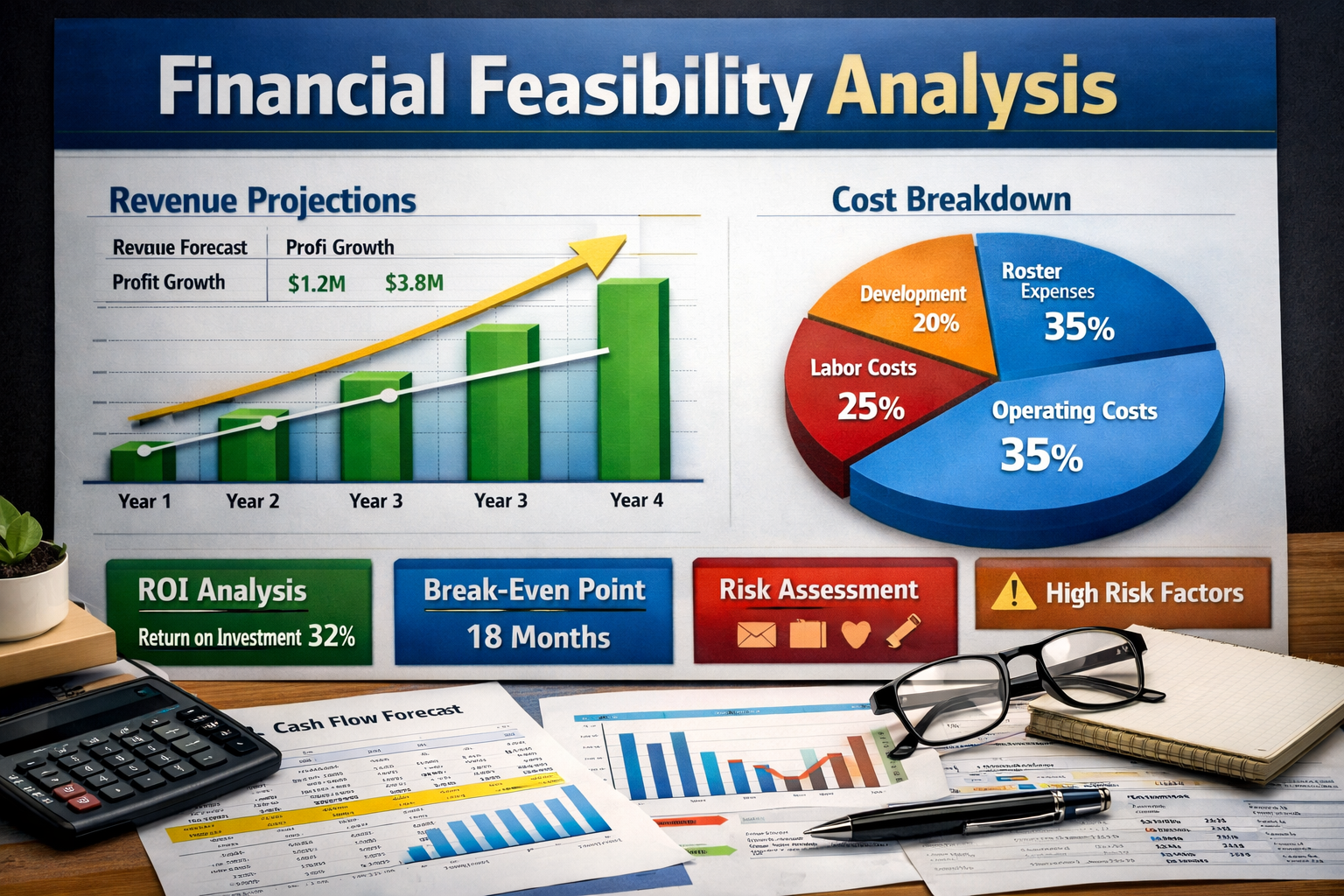
A financial feasibility study focuses on determining whether a project makes economic sense. Companies often rely on financial feasibility study services to analyze the cost, revenue potential, and financial risks of a project before investing.
Financial feasibility answers questions like:
- Will the project generate profit?
- How long will it take to recover the investment?
- What are the potential financial risks?
- Does the business have sufficient funding?
Key Components of a Financial Feasibility Study
- Initial Investment Analysis
This includes startup costs, infrastructure, technology, labor, and operational setup expenses. - Revenue Projections
Businesses estimate potential revenue streams based on market demand and pricing strategies. - Cost Analysis
This examines both fixed and variable costs such as production, salaries, logistics, and maintenance. - Profitability Analysis
Financial experts calculate metrics like ROI, net present value (NPV), and break-even points.
Risk Assessment
A proper financial feasibility study services provider evaluates financial risks such as market fluctuations, funding challenges, and operational costs.
What is a Technical Feasibility Study?
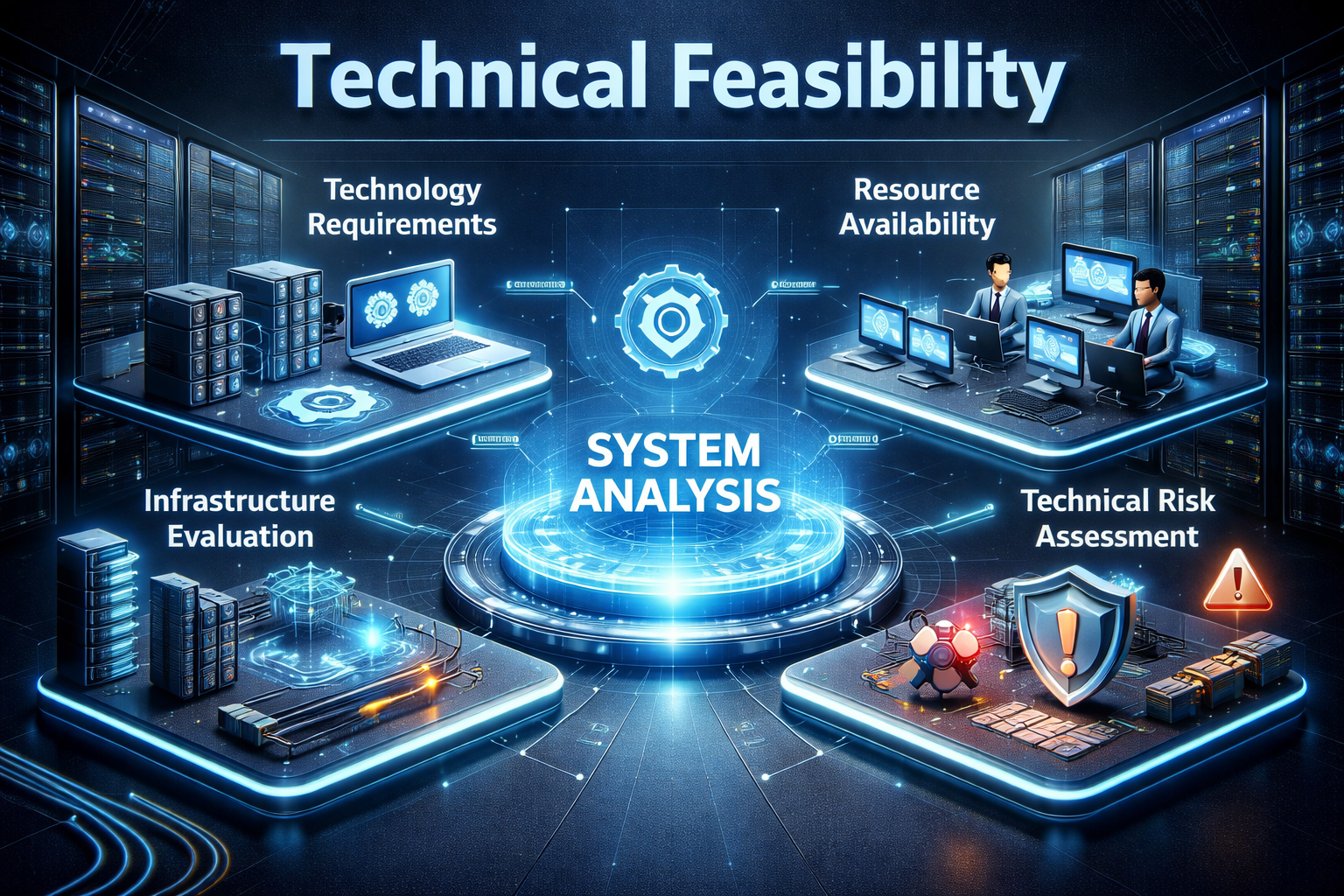
A technical feasibility study focuses on whether the organization has the technology, infrastructure, and expertise required to implement a project successfully.
While financial feasibility looks at money, technical feasibility focuses on execution capability.
It answers questions such as:
- Do we have the required technology?
- Is the infrastructure capable of supporting the project?
- Do we have skilled staff to implement it?
- Are there technical risks involved?
Key Components of Technical Feasibility
- Technology Requirements
Evaluation of hardware, software, tools, and systems required. - Infrastructure Capability
Assessing whether existing infrastructure can support the project. - Resource Availability
Determining if the organisation has skilled personnel or requires additional training or hiring. - System Integration
Checking whether the new project integrates smoothly with existing systems. - Technical Risk Assessment
Identifying possible technical limitations or challenges.
Financial vs Technical Feasibility Study: Key Differences
Factor | Financial Feasibility | Technical Feasibility |
Focus | Economic viability | Technical capability |
Main Goal | Determine profitability | Determine practicality |
Key Analysis | Cost, revenue, ROI | Technology, systems, infrastructure |
| Stakeholders | Financial analysts, investors | Engineers, IT teams, project managers |
| Outcome | Determines if project is financially viable | Determines if project can be technically executed |
Why Businesses Need Financial Feasibility Study Services
Professional financial feasibility study services provide businesses with accurate data and insights before major investments. These services help companies:
- Reduce financial risk
- Improve investment decision-making
- Plan project budgets effectively
- Secure funding from investors
- Build sustainable business strategies

When Should Businesses Conduct a Feasibility Study?
Businesses should perform feasibility studies before:
- Launching a new product
- Expanding into new markets
- Starting a large infrastructure project
- Implementing new technology systems
- Seeking investor funding
Conclusion
Both financial feasibility studies and technical feasibility studies play a critical role in project planning and strategic decision-making.While financial feasibility determines whether a project is economically viable, technical feasibility evaluates whether the project can be successfully implemented using available technology and resources.